
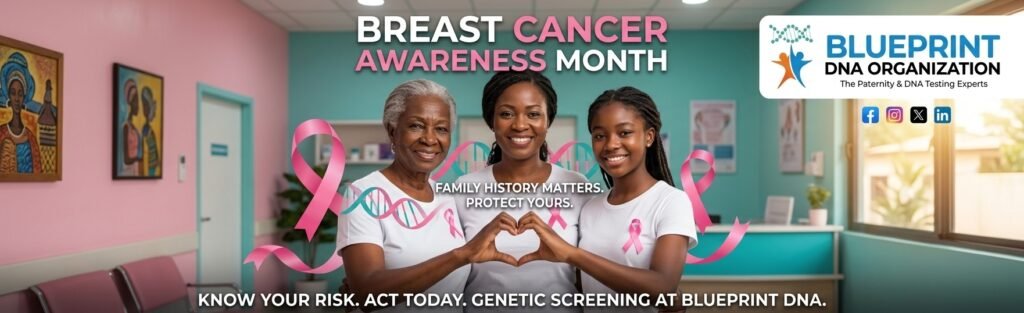
October is Breast Cancer Awareness Month! It is a special time of year when communities across the globe wear pink ribbons, share stories, and learn how to take charge of their health.
At Blueprint DNA, we believe that knowledge is power. When you understand your body and your genetic makeup, you can make informed decisions to protect yourself and your family. Let’s break down what breast cancer is, how genetics plays a vital role, and how a simple DNA test can help you stay one step ahead.
What Is Breast Cancer?
Our bodies are made up of trillions of tiny building blocks called cells. In a healthy body, cells grow, divide to make new cells when needed, and naturally die when they get old or damaged.
Sometimes, this process goes wrong. Cells begin to divide uncontrollably and form a mass or lump called a tumor. When these abnormal cells grow in the tissue of the breast, it is called breast cancer.
While breast cancer is much more common in women, men have breast tissue too and can also develop breast cancer. Awareness and early detection are crucial for everyone!
What Causes Breast Cancer? (Risk Factors)
Doctors and scientists don’t always know exactly what triggers breast cancer in every individual, but they do know several key factors that influence risk:
- Age: Risk increases as we grow older.
- Gender: Women are significantly more likely than men to develop breast cancer.
- Lifestyle & Environment: Diet, physical activity, and environmental factors play a role.
- Genetics & Family History: Changes in your DNA inherited from your mother or father can increase your risk.
Why Family History Matters So Much
Have you ever noticed that you inherited your mom’s eye color or your dad’s height? We inherit these physical traits through genes, which are the instruction manuals passed down from parents to children.
In some families, an instruction manual carries a tiny mistake or “typo”; what scientists call a genetic mutation. If a parent has a gene mutation linked to breast cancer, they can pass that same mutation down to their sons or daughters.
If you have close family members (such as a mother, sister, grandmother, or aunt) who have been diagnosed with breast or ovarian cancer, you may have an inherited risk. However, having a family history does not mean you are guaranteed to get cancer; it simply means taking proactive steps early is essential.
The Power of DNA: Understanding the BRCA Genes
Inside our cells are protective genes, most notably BRCA1 and BRCA2 (short for BReast CAncer genes). In a healthy body, these genes act like tiny mechanics—repairing broken DNA and stopping tumors from growing.
When a harmful mutation occurs in the BRCA1 or BRCA2 gene, the repair system doesn’t work properly, raising the likelihood of tumor development. Genetic testing looks specifically at these genes to identify if you carry a mutation.
Why Get Tested at Blueprint DNA?
- Early Detection & Prevention: Knowing your genetic status allows you and your doctor to schedule screenings (like mammograms or ultrasounds) at an earlier age.
- Personalized Healthcare Plans: Your doctor can tailor lifestyle recommendations and medical check-ups specifically to your body’s needs.
- Empowering Your Whole Family: If a genetic marker is identified, your siblings, children, or relatives can also test and protect their health.
How Does Genetic Screening Work at Blueprint DNA?
Getting your DNA tested is safe, quick, and painless. Here is what the process looks like:
- Consultation: Speak with a specialist about your medical and family health history.
- Sample Collection: We collect a simple sample using a quick mouth/cheek swab or a small blood sample; no complex procedures required!
- Laboratory Analysis: Our advanced lab screens your DNA for key mutations associated with breast cancer risk.
- Clear Results & Guidance: You receive a comprehensive, easy-to-understand rchaeport along with expert guidance on your next steps.
Everyday Healthy Habits to Reduce Your Risk
While you cannot change your age or genetics, you can take simple steps every day to support your overall wellness:
- Perform Monthly Self-Exams: Get familiar with how your breasts normally look and feel so you notice any changes immediately.
- Maintain a Balanced Diet: Eat plenty of fresh fruits, vegetables, whole grains, and lean proteins.
- Stay Active: Aim for at least 30 minutes of moderate exercise (like walking or dancing) most days of the week.
- Limit Alcohol & Avoid Tobacco: Cutting back on alcohol and staying smoke-free lowers overall cancer risks.
- Schedule Regular Check-Ups: Visit your doctor for annual clinical exams.
Frequently Asked Questions (FAQs)
1. If no one in my family had cancer, does that mean I am 100% safe?
No. Most people diagnosed with breast cancer have no family history of the disease at all. Regular check-ups and healthy living are important for everyone, regardless of family background.
2. Can men pass down a breast cancer gene mutation?
Yes! Men carry BRCA1 and BRCA2 genes just like women do. A father can pass a mutated gene down to his daughters or sons.
3. Is genetic testing painful?
Not at all. In most cases, it involves a gentle cheek swab inside your mouth or a standard blood draw.
4. What should I do if my DNA test comes back positive for a gene mutation?
A positive result is not a cancer diagnosis; it is simply information. It means you have a higher risk, allowing you and your medical team to put a proactive monitoring and protection plan in place early.
Take Charge of Your Health Today
Breast cancer can be intimidating, but early detection and awareness save lives. By understanding your family history and testing your DNA, you take control of your health future.
Ready to learn more about genetic testing for you or a loved one? Visit blueprintdna.org today or reach out to our team via +233 54 711 3957 to get started!